
The Market May 30, 2026

Buying a Home in Houston? The Cost That Often Catches Buyers by Surprise

When buyers begin a Houston home search, they usually know their down payment figure.

They may already have a mortgage pre-approval. They’ve worked out a monthly payment. They know the price range they feel comfortable with.

Then we begin talking about cash to close.

That’s often when the surprise comes.

Because the amount you bring to closing is not simply your down payment. It can also include lender fees, title-related costs, appraisal fees, prepaid interest, homeowners insurance and the funds needed to start an escrow account for property taxes and insurance.

For buyers relocating to Texas, the property tax portion is often the biggest adjustment.

Houston buyers have more choice, but the numbers still matter

The Houston market has become more balanced in 2026.

In the Houston Association of Realtors’ April 2026 market update, active single-family listings were up 6.5% from the previous year. Homes also took a little longer to sell, with average days on market rising from 55 to 60 days.

That gives buyers more time to compare homes and, in some cases, more room to discuss seller contributions towards allowable closing costs.

But more choice does not remove the need for careful planning.

A home can feel comfortably within budget until taxes, insurance and prepaid costs are added to the full monthly and upfront picture.

The line items buyers expect

Most buyers expect some costs around the mortgage and the transaction itself.

These may include:

  • Lender fees and any discount points
  • The appraisal fee
  • Survey costs, where a new or updated survey is needed
  • Home inspections paid during the option period
  • Title-related charges

One Texas detail is worth knowing.

When an owner’s title policy and a lender’s title policy are issued together, and the required conditions are met, the lender’s title policy premium is $100 under Texas title insurance rules.

Texas title insurance basic premium rates also changed on March 1, 2026, following a 6.2% reduction ordered by the Texas Department of Insurance.

These are not usually the costs that cause the greatest shock, though.

That tends to come from the prepaid amounts.

The surprise for many relocating buyers: taxes and insurance

Texas does not have a state property tax. Instead, local taxing units set property tax rates.

That means the tax bill can look very different from one community to another.

For a buyer moving from the UK, Europe or another part of the United States, this can be an unexpected part of buying in Houston.

If you are financing the purchase and using an escrow account, your lender may collect funds at closing for future property tax and homeowners insurance payments.

The amount depends on the home, the tax rate, your insurance quote, your lender’s requirements and the time of year you close.

This is why two homes with a similar sales price can have very different cash-to-close figures.

Newer communities need an extra tax check

This becomes especially important when buyers are looking at newer master-planned communities in areas such as Katy, Fulshear, Cypress or Bridgeland.

Many newer communities include a Municipal Utility District, commonly known as a MUD. That district can form part of the overall property tax bill.

A MUD is not automatically a reason to avoid a community. Newer communities often offer beautiful homes, excellent amenities and a lifestyle that suits relocating families very well.

But the full tax rate needs to be checked before a buyer makes a decision.

A builder incentive or an attractive mortgage payment is only part of the calculation. Buyers need to understand the total monthly cost of owning that specific home.

Insurance deserves the same attention

Homeowners insurance has become a much bigger conversation for buyers in the Houston area.

The quote will depend on the home’s age, roof, claims history, construction details and location. Flood insurance may also need to be considered, depending on the property and the buyer’s lending requirements.

This is not something I want my buyers discovering at the very end of the transaction.

A beautiful home only feels like the right home if the complete financial picture works too.

Timing can affect your cash to close

Your closing date can also change the amount needed at closing.

With a financed purchase, buyers may pay prepaid interest from the closing date to the end of that month. Closing earlier in the month can mean more days of prepaid interest than closing later.

That does not mean buyers should choose a closing date based on interest alone. Moving schedules, lease endings, work start dates and seller needs all matter.

It is simply one more detail worth understanding before the contract is finalised.

Your Closing Disclosure should not be the first time you see the numbers

For financed purchases, lenders must provide a Closing Disclosure at least three business days before closing.

That document sets out the final loan terms and closing costs. It is important, and buyers should review it carefully.

But I do not believe a buyer should reach that stage without already having a good understanding of the likely costs involved.

Before my buyers make an offer, I want them to know what to ask their lender, what tax rate to verify and what insurance information they need.

The exact figure will continue to develop as the transaction moves forward. But the overall picture should never be a last-minute shock.

One helpful step after closing

For buyers purchasing a primary residence in Texas, the residence homestead exemption is also worth understanding.

Texas law requires school districts to provide a $140,000 residence homestead exemption on a qualifying primary home. Other local exemptions may also be available.

It is not a closing-cost discount, and it does not reduce what you need to bring to the table on closing day.

But once you own and occupy the home as your primary residence, it can make a meaningful difference to future property tax bills.

The real lesson for Houston buyers

The purchase price is only the beginning of the conversation.

Whether you are buying a new-build home in Katy, a family home in Sugar Land, or a resale property closer into Houston, you need to understand the full cost of the move.

That means looking at:

  • Cash needed at closing
  • Property taxes and any MUD rate
  • Insurance costs
  • Loan terms and escrow requirements
  • Monthly payment after all costs are included

For relocating buyers, this is particularly important. You may be learning a new city, a new market and, sometimes, an entirely new way of purchasing property.

My role is to help make that process feel clear, calm and properly planned from the beginning.

If you are preparing for a move to Houston and would like help understanding the areas, homes and costs involved, I would be very happy to have a conversation.

Shian Munro is a British Realtor® with Coldwell Banker Realty in Houston. She specialises in relocation and luxury homes, helping international and interstate buyers feel confidently at home in Texas.


Sources: Houston Association of Realtors®, April 2026 Housing Market Update; Consumer Financial Protection Bureau, Closing Disclosure guidance; Texas Department of Insurance, Texas Title Insurance Basic Manual and 2026 rate schedule; Texas Comptroller, Property Tax Assistance and Residence Homestead Exemption guidance.
Understanding the Buying process May 29, 2026

Foundation Inspections in Houston: When Buyers Should Take a Closer Look

Do Houston Home Buyers Need a Foundation Inspection?

Not every Houston home buyer needs a separate foundation inspection.

However, every buyer does need to understand that foundations matter here more than they may in other parts of the country.

Houston has clay-heavy soils that can expand when they absorb moisture and shrink during hot, dry periods. That movement can place stress on a home over time, particularly on slab foundations.

When I’m helping a buyer purchase a home, I don’t automatically suggest bringing in every specialist under the sun. That quickly becomes expensive and overwhelming.

What I do suggest is paying close attention during the showing and the general home inspection. If we see signs of possible foundation movement, previous repairs, unusual cracking, drainage concerns or anything else that makes us pause, then I would usually recommend taking the next step and speaking with an independent engineer.

It isn’t about frightening buyers. It’s about knowing what you’re buying before you commit.

Why Foundations Matter in Houston

For buyers relocating from the UK, the northeast, the west coast or overseas, foundations may not be something they have ever given much thought to.

In Houston, they are part of the conversation.

Much of the Greater Houston area has expansive clay soil. When the soil becomes wet, it can swell. When we go through long hot, dry spells, it can shrink. Over time, that cycle can affect how a home settles and performs.

That does not mean every crack is a disaster.

It also does not mean that a home with a previous foundation repair should automatically be avoided. Plenty of Houston homes have had foundation work completed and continue to be perfectly good homes.

The important thing is knowing what has happened, what documentation exists and whether there is any current concern.

A General Home Inspection Comes First

For most buyers, the first step is a thorough general home inspection during the option period.

A licensed Texas home inspector will look at the foundation as part of the overall inspection. They will note visible signs that may suggest adverse performance, such as cracks, sticking doors, sloping floors or other movement indicators.

However, a general home inspection is not the same as an engineering assessment.

A home inspector is reviewing the visible condition of the home as part of a much broader inspection. A Texas-licensed professional engineer with residential foundation experience can provide a more specialised assessment when there is a specific concern.

That is why I see a foundation inspection as something to recommend thoughtfully, rather than automatically.

When I Would Recommend a Separate Foundation Assessment

There are certain situations where I would strongly suggest that a buyer considers bringing in an independent engineer.

These include:

  • Visible stair-step cracking in exterior brickwork
  • Significant diagonal cracks from windows or door frames
  • Doors that will not close properly or appear noticeably out of square
  • Floors that seem to slope
  • Gaps around walls, ceilings, floors or window frames
  • Evidence of previous foundation repairs without clear documentation
  • A seller’s disclosure noting foundation movement or repair
  • Drainage issues or standing water around the home
  • An inspector raising concerns in their report

Sometimes buyers simply want the additional reassurance, particularly if they are purchasing from overseas or making decisions remotely. That is completely reasonable too.

My job is not to push unnecessary inspections. My job is to help buyers recognise when spending a little more on due diligence may save them from a much bigger concern later.

Slab Foundations and Pier-and-Beam Homes

Most Houston-area homes have a slab foundation. This means the concrete foundation is poured directly onto the prepared ground beneath the home.

Because the slab supports the entire structure, movement can sometimes show itself through cracks, doors that stick or changes in the flooring.

Pier-and-beam foundations are more common in some older neighbourhoods, particularly closer to central Houston. These homes have a crawl space beneath them, with the structure supported by piers and beams.

Pier-and-beam homes come with their own considerations. An inspector may look for moisture beneath the home, wood deterioration, termite damage, ventilation issues and uneven flooring.

Neither foundation type is automatically better or worse. They simply need to be assessed differently.

What Buyers Can Notice During a Showing

You do not need to be an engineer to notice that something may deserve further investigation.

When I’m walking through a home with buyers, I’m paying attention to things such as:

  • Cracks that run diagonally from doors or windows
  • Doors that stick or will not latch properly
  • Flooring that feels noticeably uneven
  • Cracking in brickwork outside the home
  • Separation around trim, ceilings or flooring
  • Areas where water appears to collect close to the house

None of these necessarily means the home has a serious structural problem.

A small crack may be cosmetic. A door may stick because of humidity, paint or simple wear and tear. A repaired foundation may have excellent records and a transferable warranty.

But these are the signs that tell us not to guess. They tell us to investigate properly.

Using the Option Period Wisely

In a Texas purchase contract, the option period is the buyer’s negotiated window to carry out inspections and decide whether they are comfortable moving forward.

I always encourage buyers to schedule their general inspection as early in that period as possible.

That way, if the inspector raises a concern about the foundation, roof, drainage, plumbing, HVAC or anything else, we have time to bring in the appropriate specialist before the deadline.

If a foundation concern does arise, I generally prefer an independent assessment from a Texas-licensed professional engineer experienced in residential foundations before discussing repairs or credits.

A repair company may be able to quote for work once a problem has been established. But when the question is whether a structural issue exists in the first place, an independent opinion gives the buyer a much clearer starting point.

What Happens If the Home Has Foundation Repairs?

A history of foundation repair does not automatically make a home a bad purchase.

In Houston, repaired foundations are not unusual. The questions I would want answered are:

  • What work was completed?
  • When was it completed?
  • Who performed the work?
  • Was an engineer involved?
  • Is there a transferable warranty?
  • Have there been any continuing concerns since the repair?
  • Does the current inspection suggest further movement?

Documentation matters.

A home with professionally completed repairs, a clear report and a transferable warranty may be far less concerning than a home showing obvious movement with no investigation at all.

This is where local guidance becomes particularly important. We are not simply reacting to the word “foundation.” We are looking at the full picture.

Negotiating After a Foundation Concern

If an inspection identifies a foundation concern, the next step depends on the severity of the issue and the buyer’s comfort level.

In some situations, the engineer may note movement but recommend no repair at that time.

In others, repairs may be advised. The buyer may then consider requesting a credit, negotiating repairs, renegotiating the price or deciding that the home is no longer the right fit.

There is no single correct answer.

Some buyers are comfortable taking on repairs when the numbers and documentation make sense. Others would rather purchase a home without that uncertainty. Both approaches are valid.

My role is to help my buyers understand the information in front of them, speak with the right professionals and negotiate from an informed position.

A Note on New Construction

New construction is not automatically free from foundation concerns.

New homes in Katy, Bridgeland, Cypress, Fulshear, Sugar Land and across Greater Houston are still built on Houston-area soils. Grading, drainage, construction quality and moisture management around the home all matter.

With new construction, buyers should review the builder’s warranty carefully rather than assume every builder provides the same structural coverage.

I also recommend that buyers consider independent inspections during construction and before closing. A brand-new home may look beautiful, but buyers should still have their own representation and their own due diligence.

Relocating From the UK or Overseas?

For international buyers, this is often one of the most unfamiliar parts of purchasing a home in Houston.

In the UK, buyers may be more accustomed to conversations around damp, older roofs, subsidence in certain areas or survey levels. In Houston, foundations, drainage, flood considerations, MUD taxes and HOAs are often part of the learning curve.

That is one of the reasons I enjoy working with relocation clients. I understand how different the process can feel when the terminology, expectations and even the homes themselves are unfamiliar.

You do not need to become an expert in Houston soil before you buy a home.

You do need an agent who knows when something deserves a closer look and who can help you build the right inspection team around your purchase.

Frequently Asked Questions

Does every Houston home need a separate foundation inspection?

No. A general home inspection includes a visual assessment of the foundation, and many homes do not show any concerns requiring further investigation.

However, if there are visible warning signs, previous repairs, disclosure issues, drainage concerns or anything unusual in the inspection report, a separate assessment by an independent Texas-licensed professional engineer may be a very sensible step.

Is a foundation inspection the same as a general home inspection?

No.

A general home inspection reviews the home as a whole, including visible foundation performance. A separate engineering assessment focuses more specifically on structural concerns and may be recommended when something needs a deeper look.

What foundation warning signs should buyers look for?

Common signs that may deserve further investigation include stair-step cracking in brick, diagonal cracking around windows or doors, doors that do not close properly, noticeable sloping floors, gaps around trim or ceilings, and evidence of previous repairs without supporting documentation.

None of these automatically means the home is a bad purchase. They simply mean it is worth asking more questions.

Can I buy a Houston home that has had foundation repairs?

Yes. Many Houston homes have had foundation repairs at some point.

The important things are the quality of the work, the engineer’s findings, the repair documentation, any transferable warranty and whether there are signs of continuing movement.

When would a foundation inspection happen?

Usually, any additional foundation assessment would take place after the buyer is under contract, during the negotiated option period.

That is why it is so important to schedule the general inspection early. It gives buyers time to obtain further advice before their contractual deadline.

Final Thoughts

Foundations are an important part of buying a home in Houston, but they do not need to be frightening.

Not every home needs a separate foundation inspection. Not every crack is a crisis. And a home with previous repairs is not automatically one to avoid.

What matters is taking the right steps for the specific home in front of you.

When I work with buyers, especially those relocating to Houston, I want them to understand what is normal, what deserves more investigation and what questions to ask before they commit.

If you are considering buying in the Houston area and would like help navigating inspections, neighbourhoods and the relocation process, I would be very happy to talk it through with you.

No pressure. Just practical, honest guidance about the home and the move ahead.

About Shian Munro, Realtor®

Shian Munro is a British Realtor® with Coldwell Banker Realty, based in Katy, Texas. With an international background and personal experience of relocating across countries and continents, she specialises in helping relocation clients, international buyers, families and luxury buyers and sellers navigate Houston-area real estate with confidence.

Her approach is warm, practical and relationship-focused, helping clients feel informed, supported and genuinely at home in Texas.

License #821314.

The Market May 26, 2026

New Construction or Resale in Houston: Which Is Right for You in 2026?

If you’re buying a home in Houston, you may be weighing up two choices.

Do you choose a brand-new home with modern finishes and possible builder incentives?

Or do you choose a resale home in an established area, with mature trees and a shorter commute?

It’s a question I talk through with buyers all the time. It comes up even more often with families relocating to Houston.

The honest answer is simple. Neither option is always better.

The right choice depends on your budget, your commute and your timeline. It also depends on how you want to live once you’re here.

Houston Buyers Have More Choice in 2026

The Houston market is more balanced than it was a few years ago.

According to the Houston Association of Realtors’ April 2026 Housing Market Update, active single-family listings rose 6.5% from the year before. Homes also took a little longer to sell. Average days on market increased from 55 days to 60 days.

Inventory reached a 4.9-month supply. In simple terms, buyers now have more homes to consider.

That matters when you’re relocating.

You’re not only choosing a house. You’re also learning the communities, commute times, schools and local lifestyle.

A little breathing room helps you make a calmer, better decision.

Why New Construction Can Be Appealing

Houston has plenty of new construction. You’ll find it across Katy, Fulshear, Cypress and Bridgeland.

For many buyers, a new home feels reassuring.

You may have a modern layout, new systems and a builder warranty. You’re also less likely to face major repairs in the first few years.

Some builders also offer incentives on selected homes. These may include help with closing costs, financing offers or design upgrades.

Those incentives can be valuable. However, they are not all the same.

An advertised interest rate may only apply to one home or loan type. It may also require you to use the builder’s lender and close by a set date.

So, before you fall in love with the headline offer, we need to look at the full details.

What Resale Homes Can Offer

A new home may be fresh and easy. But a resale home can offer things that take years to create.

You may find mature trees, a finished pool or a larger lot. The home may already have shutters, upgraded lighting and an outdoor kitchen.

Those extras can cost a great deal to add to a new home later.

Location also matters.

If you work in the Energy Corridor, Downtown or the Medical Center, a closer-in home may make everyday life easier.

A beautiful new home further out may still be right for you. But only if the commute works for your real life.

This is particularly important when you’re moving from overseas or another state. It can be hard to judge Houston traffic from a map.

Sometimes, a slightly older home in the right location is the better lifestyle choice.

Don’t Compare the Purchase Price Alone

It’s tempting to compare two homes by price and mortgage payment. But that doesn’t tell the whole story.

With new construction, I encourage buyers to check:

  • The full property tax rate
  • Any MUD taxes and HOA fees
  • The exact terms of builder incentives
  • Which upgrades are included
  • Whether appliances, blinds and landscaping are included
  • The daily commute from the community

With a resale home, it’s important to consider:

  • The age of the roof and air conditioning systems
  • Repairs or updates you may need soon
  • Insurance costs and inspection findings
  • The value of an existing pool or landscaping
  • The time you may save because of the location

Sometimes, a new home offers excellent value.

Sometimes, a resale home already includes the features you would otherwise have to pay for later.

The best choice is the one that works for your monthly budget and your daily life.

Property Taxes Need Careful Attention

Property taxes are an important part of buying in Houston’s suburbs.

Many newer communities sit within a Municipal Utility District, known as a MUD. A MUD helps pay for water, sewer, drainage and local infrastructure.

The MUD tax forms part of the home’s total property tax rate.

That total rate can vary from one community to another. It can even vary between sections of the same development.

This is why I never want a buyer to focus only on the sales price. A lovely new home with an attractive incentive may still carry a higher monthly cost.

Before you commit to any home, we should check the full tax rate for that address.

Builder Contracts Work Differently

There is another important difference between new construction and resale.

A resale purchase in Texas will usually use a standard Texas Real Estate Commission contract form.

A builder may use its own contract. It can include different rules for deposits, inspections, timelines and delays.

That doesn’t mean you should avoid new construction. It simply means you need to understand the agreement before you sign it.

The sales representative in the model home works for the builder.

Your own agent is there for you. They can help you compare costs, ask the right questions and understand the process.

It’s also best to make contact with your own agent before visiting a model home. That helps protect your representation from the beginning.

How Different Houston Areas May Fit Your Search

Katy and Fulshear

Katy and Fulshear offer both new homes and resale options.

Newer communities may suit buyers who want modern homes and community amenities. Established areas may offer larger lots, mature landscaping and finished pools.

If you commute towards the Energy Corridor or central Houston, location within the area matters. Always test the commute, not just the mileage.

Cypress and Bridgeland

Bridgeland continues to attract buyers looking for newer homes and master-planned amenities.

There is also major future development planned for the area. The Houston Texans headquarters and Toro District plans have added further interest to the corridor.

For buyers considering Bridgeland, I would look closely at commute time, available homes and property taxes.

The Woodlands and Sugar Land

The Woodlands and Sugar Land offer an established community feel.

Many popular sections are now focused on resale homes. These areas can work well for buyers who value mature landscaping, amenities and a strong sense of community.

Memorial, Spring Branch and The Heights

If being closer to central Houston matters most, resale is likely to lead your search.

These areas offer easier access to many work centres, restaurants and city amenities.

The trade-off may be an older home, a smaller lot or a property that needs updating. For many buyers, the location is worth that compromise.

So, Which Choice Makes Sense for You?

A new home may suit you if you value modern layouts, newer systems and less immediate maintenance. Builder incentives may also help with your upfront costs.

A resale home may suit you if you value location, mature trees, a larger lot or an established neighbourhood.

Most buyers are not deciding on one point alone.

They are balancing price, taxes, commute, maintenance, lifestyle and timing.

That is why it helps to look at the full picture before making a decision.

Frequently Asked Questions

Can I still use my own agent when buying new construction?

Yes. In many cases, buyers can have their own representation and still receive available builder incentives. The exact terms should always be confirmed with the builder.

How quickly can I move into a new home?

It depends on the home.

A completed inventory home may be ready much sooner. A home built from the ground up can take several months or longer.

If you’re moving for work, school or visa reasons, timing should guide the search from the start.

Are taxes always higher on a new construction home?

No. However, many newer suburban communities include MUD taxes. That can increase the overall tax rate.

The important number is the full tax rate for the specific home you’re considering.

Can I negotiate with a builder?

Sometimes. Builders may have more flexibility with closing costs, upgrades or inventory homes than with the base price.

Builder offers change often, so it’s important to check what is available at the time you buy.

Planning a Move to Houston?

Whether you’re considering a new build in Katy or Bridgeland, or a resale home in Memorial, Spring Branch, Sugar Land or The Woodlands, the right choice begins with your own priorities.

I work with relocating professionals, international buyers and families moving into the Houston area. I help them compare communities, understand the costs and find a home that suits the way they want to live.

If you’re planning a move to Houston, I’d be very happy to help you work through your options.

Book a complimentary relocation consultation through my website.

Shian Munro is a British Realtor® with Coldwell Banker Realty, based in the Houston area. She specialises in relocation and luxury homes, helping international and interstate buyers feel confidently at home in Texas.


Market data source: Houston Association of Realtors®, April 2026 Housing Market Update, published May 13, 2026.

The Market May 25, 2026

Why Some Higher-End Homes in Katy Are Taking Longer to Sell — and What That Means for Buyers

Every week, I speak with professionals and families who are relocating to Houston and have Katy firmly on their list.

Usually, they’ve already done plenty of research. They know Katy offers beautiful master-planned communities, excellent amenities, highly regarded schools and a lifestyle that can be difficult to match at the same price point in many other parts of the country.

Then they start looking at homes online.

And one thing often surprises them.

Some genuinely beautiful higher-end homes have been sitting on the market for two months. Occasionally longer.

When you’re moving from a faster-paced market, that can feel concerning. You may wonder whether there’s something wrong with the home, the neighbourhood or the wider market.

Often, there isn’t.

What it usually means is that the market has changed. Buyers now have more choice, more time and, in some situations, more room to negotiate.

Buyers Have More Breathing Room Than They Did Before

The Houston housing market isn’t in distress. It has simply become more balanced.

According to the Houston Association of Realtors’ April 2026 Housing Market Update, active single-family listings across Greater Houston increased by 6.5% compared with April 2025. Homes also took a little longer to sell, with average days on market rising from 55 days to 60 days.

Inventory increased to a 4.9-month supply, which means buyers are seeing more options than they did during the extremely competitive years of 2020 to 2022.

That matters when you’re relocating.

You’re not simply choosing a house. You’re trying to understand commute times, community amenities, schools, traffic patterns and where your daily life will actually work best.

Having a little more time to make that decision is valuable.

The Higher-End Market Is More Nuanced

At the higher end of the Houston market, buyers are still active.

In April 2026, sales of single-family homes priced from $500,000 to $999,999 decreased slightly year over year, while sales of homes priced above $1 million increased.

That tells us something important.

Higher-end homes are still selling, but buyers are being more selective. They’re looking carefully at price, condition, location, updates and overall value.

A beautifully presented home in the right location, priced correctly from the start, can still attract strong interest.

But a home that feels overpriced, dated or less compelling than the alternatives may take longer to sell.

New Construction Is Part of the Conversation

One of the biggest factors affecting resale homes in Katy is competition from new construction.

Buyers looking in Katy, Fulshear and the wider west Houston area may be comparing an established resale home with a brand-new property in a nearby master-planned community.

New construction can be very appealing. Buyers may find modern layouts, energy-efficient features, builder warranties and incentives that help with closing costs or financing.

That can put pressure on resale sellers, particularly when their home is priced at a level that brings it into direct competition with a new build.

However, resale homes have advantages too.

A resale property may already include mature landscaping, a finished pool, plantation shutters, upgraded lighting, appliances, outdoor living spaces and an established feel that can take years, and a considerable budget, to recreate in a new home.

The important thing is to compare the full picture.

A new-build incentive may look attractive at first glance, but an established home may already include tens of thousands of dollars in features you’d otherwise need to add later.

Pricing Matters More Than It Did a Few Years Ago

During the fastest-moving years of the market, some sellers could price ambitiously and still attract offers.

That’s much harder now.

Today’s buyers are more informed and have more homes to choose from. They’re comparing condition, updates, monthly running costs, community location and how one home stacks up against another.

When a home is priced too high from the beginning, it can lose momentum quickly.

The first few weeks on the market are important. That’s usually when a listing receives the greatest attention from serious buyers.

If buyers feel the price doesn’t make sense, they often move on.

Later price reductions can help, but they don’t always create the same interest that a well-positioned listing would have generated from day one.

For buyers, this can create opportunity.

A home that has been sitting for 60 days or more may not be a poor choice. It may simply have started at the wrong price, had photographs that didn’t show it well or been overlooked while buyers focused on newer listings.

Sometimes, it deserves a second look.

What This Means If You’re Relocating to Katy

If you’re relocating to Katy and looking at higher-end homes, the current market can work in your favour in several ways.

You May Have More Time

The pressure to make an immediate decision has eased in many situations.

Of course, an exceptional home that is beautifully presented and correctly priced can still sell quickly. But buyers often have more opportunity now to compare communities, understand commute options and make a considered decision.

That’s especially important if you’re unfamiliar with Houston or moving from another country or state.

You May Have Room to Negotiate

Not every seller will negotiate, and not every property needs to.

However, a home that has been on the market longer, already had a price adjustment or is competing directly with attractive new construction may offer more room for discussion.

That could include the purchase price, repairs, closing costs, items that remain with the home or a closing timeline that better suits your move.

You Have Genuine Choice

At this price point, choosing between new construction and resale is a real decision.

A new home may offer newer systems, warranties and the opportunity to be the first person to live there.

A resale home may offer an established community, mature trees, completed landscaping, a pool, upgrades and a much clearer sense of what the finished home will feel like.

There isn’t one correct answer. It depends on your priorities, your timeline and what will make the move feel right for you.

Don’t Automatically Dismiss a Home That Has Been Sitting

When I’m helping buyers, I don’t automatically rule out a home because it has been on the market longer than expected.

In fact, sometimes those are the homes worth looking at more closely.

A longer days-on-market figure can mean many things. Perhaps the seller started too high. Perhaps the photographs didn’t do the home justice. Perhaps a previous buyer changed direction. Or perhaps the seller is now more open to a straightforward, well-structured offer.

The key is knowing the difference between a home with genuine concerns and a home that simply hasn’t met the right buyer yet.

That’s where local knowledge and careful guidance really matter.

Considering a Move to Katy?

Katy continues to be a wonderful option for professionals, families and international buyers relocating to the Houston area.

There are beautiful communities, excellent lifestyle choices and, right now, more opportunity for buyers to make thoughtful decisions rather than rushed ones.

If you’re considering a move to Katy or the wider Houston area, I’d be happy to help you understand the communities, compare new construction with resale homes and find a property that truly fits the way you want to live.

Book a complimentary relocation consultation through my website.

Shian Munro is a British Realtor® with Coldwell Banker Realty, based in the Houston area. She specialises in relocation and luxury homes, helping international and interstate buyers feel confidently at home in Texas.


Market data source: Houston Association of Realtors®, April 2026 Housing Market Update, published May 13, 2026.


Taxes May 23, 2026

A Houston Homeowner’s Guide to the Homestead Exemption in 2026

By Shian Munro, Realtor® | May 2026

If you’ve recently bought a home in Houston, Katy, Sugar Land or the surrounding area, there’s one piece of paperwork you shouldn’t overlook: your Texas homestead exemption.

This isn’t a protest or an appeal. Instead, it’s an exemption for the home you own and live in as your primary residence. Most importantly, it can reduce the value used to calculate your property taxes.

I talk about this with every buyer I work with. It’s very easy to close on a home, move in and assume someone has already handled it. They haven’t. You need to apply.

Didn’t file straight after closing? Don’t panic. You may still be able to file late and recover taxes you overpaid.

What does the Texas homestead exemption do?

The exemption offers two important benefits:

  1. It reduces the taxable value of your home for certain taxing entities.
  2. It helps limit how quickly your appraised value can increase over time.

For 2026, qualifying Texas homeowners receive a $140,000 school district exemption on their primary residence. Texas voters approved this increase in November 2025. The previous exemption was $100,000.

So, if your home is appraised at $650,000, the school district calculates taxes on $510,000 rather than the full $650,000.

In addition, your location may qualify you for other exemptions. Your county, city, MUD or another taxing entity may offer them. Because these vary, always check the exemptions shown on your individual property record.

The 10% appraisal cap: the part buyers often don’t hear about

However, the exemption isn’t only about this year’s bill. For many homeowners, its long-term value matters even more.

Once your home qualifies for the homestead exemption in consecutive years, the appraisal cap generally limits increases in its taxable appraised value to 10% per year. This can help, even when the market value increases by more.

As a result, this matters in areas where property values can move quickly.

Imagine you buy a home for $800,000, then values in the area rise sharply the following year. The appraisal district may show a higher market value. Once the cap applies, however, it may limit the taxable appraised value.

There are two points buyers need to understand:

  • The cap won’t protect you from a market-value adjustment immediately after you buy the home.
  • The previous owner’s cap won’t transfer to you. You’ll need to apply for your own exemption.

Because of this, a buyer’s first full tax assessment can come as a surprise. It happens most often when the previous owner lived in the home for many years and benefited from a capped value.

How do you file in Harris County?

If your home is in Harris County, you’ll apply through the Harris Central Appraisal District, generally known as HCAD.

Fortunately, there’s no fee to file. You can apply online through HCAD or complete the residence homestead exemption application form.

You’ll generally need:

  • The property address and HCAD account number
  • A Texas driver’s licence or state ID showing the property address
  • Your closing or occupancy date
  • Confirmation that the home is your primary residence

Your Texas ID needs to show the property address. If it still shows your old address, update it before you file.

Can you file after closing?

Yes. Once you own and occupy the property as your primary residence, you can apply. You don’t need to wait until the following January.

In real life, that means: close on your home, move in, update your Texas ID and submit the application.

What if you missed the April deadline?

The usual filing deadline is April 30. However, missing it doesn’t always mean you’ve missed out.

For a general homestead exemption, you can usually file a late application up to two years after the taxes became delinquent for that tax year. If the appraisal district approves it and you overpaid, you may receive a refund.

So, did you buy a home in 2024 or 2025 and never file? It’s worth checking now.

What about Fort Bend, Montgomery or Waller County?

The homestead exemption applies across Texas. The only difference is that you file with the appraisal district for the county where your home is located.

  • Fort Bend County: Fort Bend Central Appraisal District
  • Montgomery County: Montgomery Central Appraisal District
  • Waller County: Waller County Appraisal District

Live in a master-planned community with a MUD? Check whether that district offers its own exemption too. MUD exemptions can vary, even between nearby communities.

A few quick questions I’m often asked

How much could the exemption save me?

That depends on your home’s value, location and taxing entities. For example, the school district exemption removes $140,000 from the value used for school district taxes. Local exemptions may reduce other parts of your bill as well.

Do I need to file every year?

Usually, no. Once your appraisal district approves the exemption, it generally stays in place. You may need to reapply if the district requests it or your eligibility changes.

Does it apply to a second home or investment property?

No. The general residence homestead exemption applies to the home you own and occupy as your primary residence.

Is this the same as protesting my property value?

No. They are two separate things. You may qualify for the exemption and still protest your appraised value if you believe it’s too high.

My advice to Houston-area homeowners

Texas property taxes can be a shock, especially for buyers moving from another state or another country.

The homestead exemption won’t remove your property taxes. It can, however, reduce your bill and help protect you from sharper increases over time.

If you’ve bought your primary home and haven’t filed yet, add it to your list. It’s free. It doesn’t take long. And it’s far better to handle it now than find out later you’ve paid more than necessary.

When I help a client buy in the Houston area, my role doesn’t end at the closing table. Property taxes, exemptions, MUD rates and future costs all form part of making a confident move.

Finally, Texas is a non-disclosure state, so the information online doesn’t always tell the full story. Through HAR MLS, I can help clients compare a home with relevant closed sales in the area. We can also talk through the tax considerations that come with ownership.

You may also want to read: How to Protest Your Houston Property Taxes — a companion guide for homeowners who believe their appraisal is too high.


About Shian Munro, Realtor®

Shian Munro is a British Realtor® with Coldwell Banker Realty, based in Katy, Texas. Having moved internationally herself, she understands how important it is to feel informed and supported during a move. She helps clients buy, sell and relocate throughout Houston and the surrounding communities, with a particular focus on relocation and luxury homes.

Shian Munro | Realtor® | Coldwell Banker Realty | License #821314

Finance May 15, 2026

Weekend Talking Points – ‘Oh My!’

This article was written by Scott Bradley Brixen and provided through ListReports. It is shared here with permission for informational purposes.


Oh my! That April CPI! Inflation surged on higher energy prices, which affect a lot more than just gasoline and jet fuel prices (airline tickets, fertilizer, etc.) So far, the housing market is showing resilience, but there is little doubt that higher mortgage rates are keeping spring/summer transaction volumes more muted than they would be otherwise.

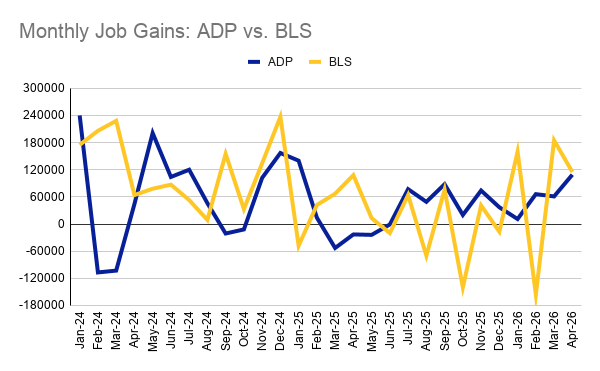
BLS: Economy added 115K jobs in April. While better than expected, April’s job growth was still modest. Over the last 12 months, only 251K net new jobs were created. The unemployment rate was steady at 4.3%. Meanwhile, the negative revisions continue: February’s original -92K number ended up at -156K after two revisions. [BLS]

TP: Just look at the volatility of the BLS’ monthly jobs numbers! It looks like a Bitcoin price graph! Meanwhile, ADP’s monthly data has shown a clear — and fairly smooth — acceleration in job growth in 2026.

Still stuck at 4 million. April existing home sales rose 0.2% month-over-month to 4,020,000 units sold (on a seasonally-adjusted, annualized basis). For 3+ years, existing home sales have been stuck in a very narrow range between 3.9 million and 4.2 million units sold (SAAR). That pace of sales is comparable to 1995 (when the USA had 70 million fewer people) and 2008–2011 (after the housing bubble burst). The reasons for the subdued sales today are well-known, but are worth repeating:

  1. Affordability Crisis — National home prices rose 47% between 2019–2023 and average mortgage rates climbed from 3% to a high of 8% between 2021–2023 (as the Fed raised rates by 525 basis points = 5.25%). This was a brutal combination for would-be buyers.
  2. I Ain’t Moving — People who purchased homes (or refinanced) during 2020–2021 enjoyed exceptionally low mortgage rates. They are naturally loath to give those rates up, even if they would prefer to move. There’s also sticker shock: the price for that larger home in that nicer area went up (at least) as much as the price of their current home did.

So both demand and supply got hit. When that happens, transaction volumes fall.

TP: The good news is that affordability has been improving lately (lower mortgage rates AND lower home prices in many markets). Plus, the ‘lock-in’ effect is fading with time: eventually the psychological need to move (twins on the way!) overcomes the financial concern (don’t want to give up my 3% rate).

April CPI, oh my! We knew it was coming, and it finally arrived. Headline CPI (Consumer Price Index = inflation for you and me) jumped to +3.8% year-over-year in April from +3.3% YoY in March. And “Core” CPI (which excludes food & fuel prices) rose to +2.8% in April from +2.6% YoY in March. The main driver was higher energy prices (thanks to the US/Iran conflict), but shelter (housing) costs also jumped due to an accounting anomaly that should disappear next month.

TP: After the scorching April CPI (and PPI) reports, the likelihood of a Fed rate cut during the remainder of 2026 dropped to zero. In fact, the market is now putting a 30% probability on rates being 25 basis points HIGHER than they are today by year-end.

Kevin Warsh confirmed as new Fed Chair by Senate. His confirmation hearings were contentious, focusing on: 1) his and the Fed’s independence given that he is President Trump’s appointee, and 2) his considerable individual and family wealth. Few questioned his qualifications.

TP: Mr. Warsh inherits a deeply divided Fed. He will remain under considerable pressure from President Trump to cut rates, but inflation is resurgent and the job market is (at least superficially) strong. While the Fed Chair’s voice can be highly persuasive in crafting a consensus view, he’s only got one vote.

MBS Housing Survey results for May. After April’s setback, the MBS Highway National Housing Index bounced back in May, gaining 5 points month over month to reach 47. The index now sits 5 points above its level from a year ago, suggesting the underlying trend remains constructive despite month-to-month volatility.

TP: As a reminder, a reading of 50 separates contraction (below 50) from expansion (above 50).

Bond and Mortgage Market

According to Freddie Mac’s weekly PMMS survey, average mortgage rates were roughly flat week-over-week. But given the bond market’s reaction to the scary April CPI figures, market mortgage rates are already moving higher. The market is still pricing in ZERO Fed rate cuts for the remainder of 2026. In fact, the market is beginning to price in some probability of rate HIKES towards the end of the year.

Note: The Fed Funds Rate policy range is currently 3.50–3.75%. The probabilities below come from the CME Group website and are implied from the Fed Funds Rate futures market.

  • June 17 FOMC Meeting: This will be Kevin Warsh’s first meeting as the new Fed Chairman. 99% probability that the Fed Funds Rate will be kept at 3.50–3.75% (was 94% last week).
  • July 29 FOMC Meeting: 99% probability that the Fed Funds Rate will be kept at 3.50–3.75% (was 88% last week).
  • September 16 FOMC Meeting. 88% probability that the Fed Funds Rate will be kept at 3.50–3.75%. An 11% probability that rates will be 25 basis point HIGHER than they are today.
  • No rate cuts in 2026? If I look way out to the last FOMC meeting of the year (Dec 9), the market is pricing in a 62% probability (was 72% last week) that the Fed Funds Rate will be exactly where it is today. Additionally, the market is now pricing in a 37% probability that rates will be at least 25 basis points (and maybe 50 basis points) higher by year-end.
They Said It

“Despite mixed macroeconomic signals — including a record-high stock market and historically low consumer confidence — home sales were modestly boosted by the continued improvement in housing affordability. Mortgage rates are lower from a year ago, and average income growth is outpacing home price gains.

Inventory still remains tight. Multiple offers, though not as intense as a few years ago, are still occurring. At the same time, days on market are lengthening on average, implying that consumers are taking their time before making decisions.” — Lawrence Yun, NAR’s Chief Economist

Local specifics. May 14, 2026

What do the 2026 FEMA flood map updates mean for Houston home buyers?

FEMA released draft flood maps for Harris County in February 2026, expanding the high-risk 100-year floodplain by approximately 50,000 acres — a 33% increase. Over 170,000 Houston-area properties and an estimated $50 billion in real estate could be reclassified as high-risk once the maps are finalised. New mandatory insurance requirements won’t take effect for two to three years, but buyers making offers right now need to understand which areas are affected, what sellers must disclose, and how to check flood history on any property before going under contract.

By Shian Munro, Realtor | Coldwell Banker Realty | 14 May 2026

If you’re buying a home in Houston right now — or planning to — flood risk is the single most important factor that most buyers don’t fully understand until it’s too late.

I’ve worked with many buyers in this market, including those relocating from the UK and elsewhere in Europe where the concept of a “flood zone” carries a very different meaning. In Texas, and especially in Houston, this isn’t a theoretical risk. It’s the first thing I check on every single property before a buyer falls in love with it.

Here’s why it matters more right now than it has in years.

What Houston’s 2026 FEMA Draft Maps Actually Say

FEMA released updated draft flood maps for Harris County in February 2026 — the first major update in years. The agency updated the county’s topography and mapped an additional 400 miles of channels across the region.

The headline numbers are significant:

  • The 100-year floodplain (the zone with at least a 1% annual flood risk) is projected to expand by roughly 50,000 acres — from 150,000 to 200,000 acres
  • That’s a 33% increase in high-risk designated land
  • More than 170,000 properties representing an estimated $50 billion in real estate assets could be reclassified as high-risk
  • The updated maps reflect a 30% increase in projected rainfall rates — a direct adjustment for current climate patterns

It’s not all bad news. Some areas in southwest Houston are actually seeing a reduced flood risk designation under the new maps — likely due to post-Harvey flood control infrastructure improvements. But south Houston, northeast Harris County near Lake Houston, and parts of the Katy and Cypress corridors are seeing expanded risk boundaries.

Specific areas worth watching closely include Meyerland and the Brays Bayou corridor (already well-known for flooding), Braeswood, and Westbury — some of which could move from the 500-year floodplain into the stricter 100-year designation.

These are draft maps. New mandatory insurance requirements won’t kick in until the maps are officially finalised, which FEMA expects will take another two to three years. But that doesn’t mean buyers can wait.

Why? Because the moment those maps are finalised, properties that move from Zone X into Zone AE will suddenly require flood insurance as a condition of any federally backed mortgage. That changes the monthly payment, the total cost of ownership, and the resale value of the home — potentially overnight.

If you’re buying a home today in a neighbourhood on the edge of these boundaries, you deserve to know that before you make an offer.

What Flood Zones Mean When You’re Buying in Houston

Let me break down the classifications, because the letters matter enormously.

Zone AE (and Zone A) — This is the Special Flood Hazard Area (SFHA). FEMA designates it as having at least a 1% annual chance of flooding. Over a 30-year mortgage, that translates to roughly a 26% cumulative probability of a flood event. If you’re buying with a federally backed mortgage (conventional, VA, FHA), flood insurance is mandatory. Houston premiums in these zones typically run $800 to $3,000+ per year, depending on the property’s elevation, age, and specific location.

Zone X — This designation means the property is outside the current high-risk boundary. No mandatory insurance. But — and this is important — Zone X does not mean flood-proof.

Between 20% and 25% of all flood insurance claims nationally come from properties in Zone X. In Houston, this played out catastrophically during Hurricane Harvey in 2017, when entire neighbourhoods that had never flooded before took on water. Many homeowners in Zone X had no flood insurance because they’d been told they didn’t need it.

The lesson: in Houston, a Zone X designation tells you where the risk is currently mapped. It doesn’t tell you the full story. And with the 2026 draft maps showing significant boundary changes, what’s Zone X today may not be Zone X in two years.

For buyers relocating from outside the US — particularly from the UK — this is a genuine knowledge gap. In Britain, flood risk information is more publicly standardised and insurance implications are well understood. In Texas, the system is more complex: FEMA maps, county appraisal records, HAR flood history data, and the Seller’s Disclosure Notice all need to be read together. This is exactly the kind of due diligence I walk my buyers through.

How to Check Flood Risk on Any Houston Property Before You Offer

Don’t wait for the Seller’s Disclosure Notice to find out a property’s flood history. Here’s what you can check before you ever submit an offer.

Step 1: Harris County Flood Education Mapping Tool
Visit harriscountyfemt.org. This tool shows floodway boundaries, 100-year floodplains, and 500-year floodplains for any Harris County address. It’s free, public, and more granular than the FEMA maps for local use.

Step 2: FEMA Flood Map Service Center
At msc.fema.gov, you can enter any address and pull the official FEMA flood zone designation. This is the document that determines insurance requirements.

Step 3: HAR.com Flood Risk Layer
HAR.com includes a flood risk overlay in its property search tool. It’s a useful first-pass filter, especially when you’re comparing multiple properties in different parts of the metro.

Step 4: Request the Seller’s Disclosure Notice Early
In Texas, sellers are legally required to provide a Seller’s Disclosure Notice before or on the effective date of the contract. But you can request it before making an offer. A good buyer’s agent will always do this — because the disclosure covers flood zone designation, flood history from the past five years, whether the home has ever been repaired for flood damage, and whether the seller has ever received flood insurance proceeds.

That last item matters. A property that flooded during Harvey and received a FEMA or NFIP claim has that history following it. You need to know this before you’re emotionally committed to a home.

Step 5: Check the Draft 2026 FEMA Maps
FEMA published the Harris County draft maps in February 2026. Even though they’re not yet final, they tell you where the boundaries are heading. If the property you’re considering sits close to the current Zone AE boundary, the draft maps can tell you whether it’s moving toward higher or lower risk. Your agent should be able to pull this for any address you’re seriously considering.

Here’s the honest truth: checking all five of these sources takes less than 20 minutes. But knowing how to interpret what you find — especially when the data across sources doesn’t perfectly align — is where experience matters. I do this on every property I show.

What Houston Sellers Are Required to Disclose

Texas strengthened its flood disclosure requirements in 2019, and they’re some of the most comprehensive in the country.

Under Texas Property Code § 5.008, a seller’s Seller’s Disclosure Notice (SDN) must indicate:

  • Whether the property is in a FEMA-designated 100-year floodplain
  • Whether the property is in a FEMA-designated 500-year floodplain
  • Whether the property has flooded at least once in the past five years
  • Whether the property is located in a flood pool for a reservoir
  • Whether the property has ever been repaired for flood damage
  • Whether the seller has ever received flood insurance proceeds for the property

What this means in practice: if a home in Katy flooded during the 2019 storms, that disclosure is legally required. If a Bellaire property received a FEMA claim after Harvey, that goes on the SDN.

What it doesn’t cover: seller must disclose what they know. A new owner who purchased after Harvey and never personally experienced flooding has less to disclose than a long-term owner. This is why checking the flood maps and county records independently — and not relying solely on the SDN — is so important.

And for sellers reading this: the disclosure requirements are not optional. A Houston energy executive once had to slash his asking price by nearly $400,000 on an otherwise exceptional Bellaire-area property because the flood disclosure history came to light during the transaction. Transparency upfront protects you too.

Whether you’re buying in Memorial, The Heights, Sugar Land, or Katy, flood risk due diligence is non-negotiable in this market. The 2026 FEMA draft maps make that more urgent — not less.


Frequently Asked Questions

Does Zone X mean my Houston property won’t flood?

No. Zone X means the property is currently outside FEMA’s designated high-risk flood area, but it does not mean flood-free. Between 20% and 25% of all flood insurance claims nationally come from properties outside high-risk zones. In Houston, many Zone X properties flooded during Hurricane Harvey. With the 2026 FEMA draft maps expanding the 100-year floodplain by approximately 50,000 acres, some properties currently in Zone X may be reclassified as Zone AE (high-risk) once the maps are finalised.

Is flood insurance required when buying a home in Houston?

Flood insurance is required by lenders for homes purchased with a federally backed mortgage that are located in a FEMA Special Flood Hazard Area (Zone A or AE). If the property is in Zone X, flood insurance is not mandatory — but many Houston buyers and lenders strongly recommend it given the city’s flood history. Annual flood insurance premiums in Harris County range from under $600 in lower-risk zones to $3,000 or more in high-risk areas.

What must Houston sellers disclose about flooding?

Under Texas Property Code § 5.008 (amended 2019), sellers must complete a Seller’s Disclosure Notice disclosing whether the property is in a FEMA 100-year or 500-year floodplain, whether it has flooded at least once in the past five years, whether it has ever been repaired for flood damage, and whether the seller has received flood insurance proceeds. This disclosure is required before or on the effective date of the purchase contract.

When will the new FEMA flood maps take effect in Houston?

FEMA released draft flood maps for Harris County in February 2026 after updating topography and adding 400 miles of mapped channels. New insurance requirements tied to the updated maps won’t take effect until the maps are officially finalised — expected in approximately two to three years from the draft release. However, buyers should review the draft maps now, as any reclassification will affect property value, insurance costs, and disclosure obligations once the maps are final.

How do I check the flood risk of a Houston home before making an offer?

Start with the Harris County Flood Education Mapping Tool at harriscountyfemt.org, which shows current floodway and floodplain boundaries. FEMA’s Flood Map Service Center at msc.fema.gov lets you look up any address by flood zone designation. HAR.com also provides a flood risk layer on its property search. Beyond the maps, ask your agent to obtain the Seller’s Disclosure Notice early in the process — it will reveal any flooding history and prior claims the seller is legally required to disclose.


Flood risk in Houston is manageable — but only if you know what to look for. The 2026 FEMA draft maps are a genuine warning shot: the high-risk boundaries are moving, and buyers who don’t check them before making an offer are taking on a risk they may not fully understand.

I check flood status, disclosure history, and the 2026 draft map boundaries on every property I work on with buyers in the Houston metro. If you’re considering a purchase in Harris, Fort Bend, Montgomery, or Waller County and you want someone in your corner who knows this market — and who will run these checks before you fall in love with a home — I’m happy to walk you through it. Book a free consultation here.


About Shian Munro, Realtor

Shian Munro is a British real estate professional with a truly global perspective, having lived across multiple countries and continents. Proudly affiliated with Coldwell Banker, she specialises in luxury homes, expat relocation, and oil & gas industry moves — bringing personalised service backed by a worldwide network. Whether you’re buying, selling, or renting in the Houston area, Shian makes every transition seamless. License #821314.

Understanding the Buying process May 12, 2026

Texas Is a Non-Disclosure State: What Houston Home Buyers Need to Know

Why can’t you see sold prices on Zillow in Houston, Texas?

Texas is one of approximately 12 non-disclosure states in the US, meaning home sale prices are not public record. Platforms like Zillow, Redfin, and Realtor.com cannot legally display actual sold prices in Texas, which is why you’ll find “N/A” or unreliable Zestimate figures where you’d expect real transaction data. The only people with access to verified sold prices are licensed Realtors who subscribe to the Houston Association of Realtors (HAR) MLS. This makes working with an experienced local agent critical for any Houston buyer who needs accurate comparable sales data before making an offer.

By Shian Munro, Realtor | May 11, 2026


You’ve done everything right. You’ve found a home you love in Katy, The Woodlands, or Cypress. You go to Zillow to look up what the house down the street sold for last month. And you get: nothing. “Price not available.” Or a Zestimate that doesn’t tell you what anything actually closed for.

If this has happened to you, you’re not missing something obvious. You’ve just bumped into one of the most surprising features of the Texas real estate market — sold prices are not public information.

For buyers moving to Houston from the UK, Europe, or even from states like California or New York, this is genuinely disorienting. In the UK, the Land Registry publishes every sold price online — anyone can look up what a house on any street sold for, going back decades. In many US states, deed records include the sale price and are fully searchable. Texas does things differently.

Here’s what’s actually going on, and why it matters for your purchase.

Texas Law Doesn’t Require Sellers to Disclose Sale Prices

Most US states require sellers to report the sale price to the county clerk or recorder’s office when the deed is recorded. That public record is what feeds the sold price data on Zillow, Redfin, and Realtor.com.

Texas has no such requirement. When a home closes in Harris County, Fort Bend County, or Montgomery County, the deed is recorded — but the price stays private between the buyer, seller, their agents, the lender, and the title company. There is no public filing that reveals what changed hands.

That’s why Texas is classified as a “non-disclosure state.” There are roughly a dozen of them across the US, and Texas is the largest and most active real estate market among them.

The result: search Zillow for recent sales in Katy or Sugar Land and you’ll see a list of properties that sold, but prices will show as blank or unavailable. Redfin and Realtor.com face the same legal constraint. They can’t display prices they don’t have legal access to.

It’s not a glitch. It’s the law.

Who Can See Sold Prices — and Why It Matters for Your Offer

Here’s where it gets important for your home search.

Licensed Realtors in Texas who subscribe to the MLS — specifically the Houston Association of Realtors (HAR) — have access to actual sold prices. When a home closes, the selling agent reports the transaction data to HAR, including the final closed price. That data lives inside the MLS and is restricted to subscribers.

In practice:

  • Your agent can pull exact closed prices, days on market, original list price vs. final sale price, price reductions, and seller concessions
  • Zillow and Redfin are working from estimates and algorithms, not real transaction data
  • You, without an agent, are essentially negotiating on a $500,000 to $1,500,000 purchase without seeing any of the actual market evidence

This is one of the most common questions that comes up on HAR’s own community forums: “How do I find the prices houses recently sold for in Houston?” Buyers — especially those relocating from out of state or internationally — expect this data to be public. When it isn’t, they often don’t know where to turn.

The answer is always the same: you need an agent with MLS access.

What a Comparative Market Analysis Gives You

Before you write an offer, your agent will prepare a Comparative Market Analysis (CMA). This is a report built entirely on verified MLS sold data — actual closed prices on homes comparable to the one you’re buying, filtered by location, size, condition, and timeframe.

A solid CMA tells you:

  • What similar homes in this neighborhood or zip code have actually closed for in the last 60–90 days
  • Whether sellers are getting above, at, or below their list price right now
  • How long homes are sitting before they sell — important for understanding your negotiating position
  • Whether the home you’re looking at is priced competitively or needs a harder look

Without a CMA grounded in real transaction data, you’re guessing. In Houston’s current market — where inventory is up, days on market have stretched to around 67 days, and prices are moderating — there are genuine opportunities to negotiate. But you can only negotiate effectively if you know where the market actually is.

Offer too high without data to support it, and you may overpay — or run into trouble at appraisal if the appraiser can’t find comparable sales to justify your price. Offer too low without understanding recent comps, and you risk losing the home to a buyer whose agent did the homework.

A Note on Appraisers and Lenders

One more layer to understand: appraisers in Texas also rely on MLS data rather than public deed records. Because sold prices don’t appear in county records, the official appraisal that your lender orders — the one that determines whether your mortgage gets approved — is built from the same MLS transaction data your agent uses.

This matters for two reasons.

First, it means appraisals in Houston’s active market are generally well-calibrated, because the MLS reporting is thorough and consistent. Second, it means that if you overpay based on bad comparable data, the appraiser is going to have trouble supporting your price — and that can blow up your financing.

Your agent’s job includes making sure your offer is defensible at appraisal, not just competitive enough to win. In a non-disclosure state, that requires someone who’s actually inside the data.

The UK Buyer’s Specific Adjustment

If you’re relocating to Houston from the UK, this will feel backwards at first — and that reaction makes complete sense.

In England and Wales, the Land Registry posts every residential transaction online, publicly and permanently. You can look up the exact price paid for any registered property in the country right now, from your phone. It’s one of the most transparent property markets in the world, and most UK buyers take it for granted.

Texas is essentially the opposite model. The data exists — it’s just gated inside the MLS, accessible only to licensed professionals.

The practical adjustment: lean harder on your agent in Houston than you would back home. This isn’t a market where you can do your own comparable research on a public portal. Your agent’s MLS subscription and their ability to interpret that data — adjusting for condition, upgrades, location within a neighborhood, and current market trajectory — is what substitutes for the Land Registry transparency you’re used to.

The data is there. It’s just not public. Make sure you’re working with someone who has access to it and knows how to use it for a home in your price range.

Houston also has its own layers of cost complexity that catch relocating buyers off guard — things like MUD taxes in suburban communities and the annual property tax structure that surprises almost every buyer from a country without ad valorem property taxes. Getting a full picture of your carrying costs before you make an offer matters just as much as the offer price itself.

Questions to Ask Your Agent Before Writing an Offer

Before you commit to an offer price, ask your agent to walk you through the comparable sales they’re working from:

  • What did similar homes in this neighborhood close for in the last 90 days?
  • What’s the average sold-to-list-price ratio in this zip code right now?
  • Were there price reductions on those comparable homes before they sold?
  • How long has this property been on the market, and have there been any price changes?
  • Are there active listings nearby that create competition — or that suggest the seller may need to negotiate?

A confident agent should be able to answer all of these directly from the MLS data. If they can’t walk you through the comps before you sign anything, that’s important information about what kind of support you’ll have throughout the transaction.


Frequently Asked Questions

Why does Zillow show “N/A” for sold prices in Texas?

Zillow cannot display sold prices in Texas because state law does not require sellers to disclose sale prices to any public entity. Without a public record to pull from, Zillow and similar platforms have no legal access to closed transaction data. The prices that do appear are Zestimates — algorithm-generated estimates, not actual sale prices.

Can buyers in Texas find out what a home sold for without an agent?

Generally, no. Unless a seller voluntarily discloses their sale price, there is no public record showing what a Texas property sold for. County deed records confirm the transfer took place, but the price is not included. Only Realtors and licensed appraisers with MLS access can see actual transaction prices through the HAR MLS.

Does Texas’s non-disclosure status affect the appraisal process?

Yes. Appraisers in Texas rely on MLS data rather than public deed records to find comparable sales, since sold prices don’t appear in county records. This means the appraisal process works well in active, well-reported markets like Houston where agents consistently report transaction data to the MLS — but it does create a dependency on MLS reporting accuracy.

How many non-disclosure states are there in the US?

As of 2026, approximately 12 states classify as non-disclosure states, including Texas, Alaska, Idaho, Kansas, Louisiana, Mississippi, Montana, New Mexico, North Dakota, Utah, Wyoming, and Missouri. Texas is by far the largest and most active real estate market among them.

What is a Comparative Market Analysis, and why does it matter in Texas?

A Comparative Market Analysis (CMA) is a report your agent prepares using actual sold prices from the MLS to help you determine a fair offer price. In a non-disclosure state like Texas, where you can’t look up sold prices yourself, the CMA is the primary tool for pricing a home accurately. A thorough CMA considers recent comparable sales, active competition, and market direction — and it’s the foundation of any informed offer in Houston’s $500K–$1.5M market.


Understanding how pricing data works in Houston gives you a real advantage over buyers who are trying to piece things together from Zillow estimates. The buyers who overpay are usually the ones who trusted an algorithm over a proper market analysis.If you’re house-hunting in Houston — whether you’re relocating from the UK, from another US state, or from across the city — I’d be glad to walk you through the comps for any home you’re considering. That’s exactly what MLS access is for, and it costs you nothing to have that conversation before you make an offer.

Book a free consultation and home equity assessment at shianmunro.sites.cbmoxi.com — or reach out directly. No pressure, just real data.


About Shian Munro, RealtorShian Munro is a British real estate professional with a truly global perspective, having lived across multiple countries and continents. Proudly affiliated with Coldwell Banker, she specializes in luxury homes, expat relocation, and oil & gas industry moves — bringing personalized service backed by a worldwide network. Whether you’re buying, selling, or renting in the Houston area, Shian makes every transition seamless.

License #821314 | Coldwell Banker Realty | shianmunro.sites.cbmoxi.com

Taxes May 11, 2026

What Is a MUD Tax in Houston — and How Much Will It Cost You?

What is a MUD tax in Houston?

A Municipal Utility District (MUD) tax is a special property tax charged on top of regular county and city taxes in many Houston-area suburban communities. MUDs are created to fund water, sewer, and drainage infrastructure in neighborhoods where city services don’t reach. In suburbs like Katy, Cypress, Bridgeland, and Sugar Land, MUD tax rates can add $0.50 to $1.50 per $100 of assessed value — meaning $3,000 to $12,000 per year on a $800,000 home. Most buyers don’t discover them until they receive their first full tax bill.

By Shian Munro, Realtor | May 9, 2026

You’ve done your numbers. You know your mortgage payment, your insurance estimate, and roughly what property taxes will look like based on the Harris County average. Then your first tax bill arrives — and it’s several hundred dollars a month more than you planned.

That’s the MUD tax. And in Houston’s suburban market, it’s one of the most consistently missed costs in the entire home buying process.

This isn’t a penalty or an error. It’s a legitimate, disclosed tax that funds real infrastructure in your neighborhood. But the rate varies wildly from one subdivision to the next — and in a market where you’re comparing homes in Katy, Cypress, Bridgeland, and Sugar Land, that variance can translate to thousands of dollars per year in lifetime cost differences between two homes with nearly identical list prices.

Here’s what it is, how to find your specific number, and what it means for your budget before you make an offer.

What Is a MUD — and Why Does Houston Have So Many of Them?

Houston is unique among major American cities in that it has no traditional zoning laws. Development happens faster and further out than in most metros — and often in areas where the city of Houston or surrounding municipalities don’t yet provide water, sewer, or drainage services.

Municipal Utility Districts fill that gap. They’re special-purpose government entities created under Texas law, authorized to issue bonds and build the infrastructure a new subdivision needs. In Katy, Cypress, Bridgeland, The Woodlands area, and dozens of other Houston suburbs, the community you’re buying into almost certainly sits inside a MUD — or several overlapping districts.

The MUD builds the water mains. The MUD builds the sewer lines. The MUD handles the drainage that’s especially critical in a city that sits on flat, clay-heavy soil with some of the highest average annual rainfall in the continental United States.

And you — as the homeowner — pay for all of it through an additional line on your property tax bill every year until those bonds are fully retired.

How Much Are MUD Taxes on a Houston Home?

There’s no single MUD tax rate. Every district sets its own rate based on how much debt it issued, how far along it is in paying those bonds down, and how assessed values in the area have changed.

In brand-new subdivisions, MUD rates are at their peak. The infrastructure was just built, the bonds were just issued, and there are relatively few homeowners sharing the debt load. Rates in new Katy, Cypress, and Fort Bend County communities can run $1.00 to $1.50 per $100 of assessed value — sometimes higher in the earliest phases.

As a community matures and bond debt gets paid down, the rate drops. A subdivision that’s been around 20 or more years might carry a MUD rate of only $0.10 to $0.25 per $100.

In dollar terms, here’s what that looks like on the kind of home my clients in greater Houston are typically considering:

On a $600,000 home:

  • Low MUD rate ($0.15/$100): ~$900/year ($75/month)
  • Mid MUD rate ($0.75/$100): ~$4,500/year ($375/month)
  • High MUD rate ($1.40/$100): ~$8,400/year ($700/month)

On an $800,000 home:

  • Low MUD rate ($0.15/$100): ~$1,200/year ($100/month)
  • Mid MUD rate ($0.75/$100): ~$6,000/year ($500/month)
  • High MUD rate ($1.40/$100): ~$11,200/year ($933/month)

Bridgeland — one of Houston’s fastest-growing master-planned communities in Cypress — typically carries a total property tax rate between 3.0% and 3.6%, with the MUD and WCID components running around $0.85 to $0.95 per $100 of value, depending on which of its several districts your specific address falls in.

The practical takeaway: two homes at the same list price in the same general area can have annual ownership costs that differ by $5,000 or more — simply because one sits in a newer MUD than the other. That’s not a small rounding error. Over five years, it’s $25,000.

How to Find the MUD Tax Rate Before You Make an Offer

You don’t have to wait until closing to know this number. Here’s how to find it:

Ask your agent first. In Texas, sellers are required to provide a MUD Notice as part of the disclosure process if the property is in a MUD. This identifies the district and confirms the buyer is aware of it. A good agent pulls the actual tax records — not just the disclosure notice — before you write an offer, not after.

Look up the property on the county appraisal district website. The Harris County Appraisal District (hcad.org) shows the full tax breakdown for every property in Harris County, including each entity collecting tax on that parcel. For Fort Bend County homes, check fbcad.org; for Montgomery County, mcad-tx.org. The listing will show “HCMUD [Number]” or “WCID [Number]” — that’s your district.

Visit the MUD’s own website. Most Harris County MUDs maintain public websites with their current tax rate and bond repayment schedule. Searching “Harris County MUD [Number]” gets you there. You can see where they are in paying off their debt — which tells you whether rates are likely to hold steady, drop, or (in early-phase communities) remain elevated for years.

Calculate the total effective tax rate. In Houston suburbs, total effective property tax rates including MUD and all other districts often land between 2.8% and 3.8%. On a $700,000 home, the difference between 2.8% and 3.8% is $7,000 per year. That’s the conversation you want to have before you fall in love with a specific address.

Here’s where having an agent with MLS access matters more than people realize. Texas is a non-disclosure state — actual closed sale prices aren’t public record. But actual tax bills are. I pull the complete tax history on any property my clients are seriously considering, so they know exactly what they’re committing to before we write a single offer.

What Happens to MUD Taxes Over Time?

The good news: they come down.

MUD bonds are typically structured with 20-to-30-year repayment timelines. As bonds are paid off, the district reduces its rate. In some cases, a fully retired MUD dissolves entirely and the area gets annexed by the city, eliminating the MUD tax altogether.

This means buying into a newer master-planned community isn’t automatically a bad deal — especially if you’re planning to hold the property for 10 or more years and will see the rate decline during your ownership period.

The less welcome news: if you’re buying in a new Phase 2 or Phase 3 section of a community like Bridgeland, you may be stepping into a MUD that was just created. Rates could stay elevated for several years before they start dropping. That’s not a reason to avoid the property — but it should be factored into your five-year cost model before closing, not discovered at your second tax payment.

Are MUD Taxes Tax Deductible?

MUD taxes are property taxes — which means they’re potentially deductible on your federal income tax return if you itemize deductions. They’re reported on the same property tax statement as your regular county taxes, and they count toward the $10,000 SALT deduction cap.

Given that total annual property tax bills in the Houston suburbs can easily run $18,000 to $30,000 or more on a home in the $600K–$1.2M range, whether to itemize or take the standard deduction is a conversation worth having with your CPA as part of your home purchase planning — not something to figure out at tax time.

Frequently Asked Questions

What neighborhoods in Houston have MUD taxes?

Most suburban master-planned communities and newer subdivisions in the greater Houston area sit inside a MUD or Water Control and Improvement District (WCID). This includes communities in Katy, Cypress, Bridgeland, Pearland, Richmond, Missouri City, Spring, Tomball, and Fort Bend County growth corridors. Inner Loop Houston neighborhoods inside the 610 loop typically do not have MUD taxes, as that infrastructure was built long before MUDs existed — but always check the specific address, as some Inner Loop–adjacent neighborhoods still carry them.

How do I know if a home I’m looking at has a MUD tax?

In Texas, sellers are legally required to provide a MUD Notice if the property is in a municipal utility district. Your agent can also pull the full tax breakdown from the county appraisal district website — HCAD for Harris County, FBCAD for Fort Bend — before you write an offer. The tax detail page will show every entity collecting property tax on that address, including any MUD or WCID.

Can I negotiate the MUD tax rate?

No — the MUD tax rate is set by the district and applies equally to every homeowner within its boundaries. What you can negotiate is your purchase price, which changes the assessed value the rate is applied to. In Houston’s current balanced market, many sellers are open to price discussions, which can meaningfully reduce your total annual tax burden.

Do new construction homes in Houston have higher MUD taxes?

Yes, typically. Newly created MUDs have just issued bonds to build infrastructure, so rates are at their peak when the community is newest. As bond debt is retired over 20–30 years, rates decrease. If you’re buying new construction in a Phase 1 or early-phase community in Katy, Cypress, or Fort Bend County, factor in elevated MUD rates for at least the first decade of ownership.

What is a WCID and is it different from a MUD?

A Water Control and Improvement District (WCID) is similar to a MUD — it’s a special-purpose district that funds water and drainage infrastructure. Some Houston communities, including parts of Bridgeland, include WCIDs alongside MUDs. Both appear as separate line items on your property tax bill and function the same way for buyers. Your agent or the county appraisal district website will show all districts affecting a specific property.


MUD taxes are one of Houston’s defining real estate quirks — and once you understand them, they’re completely manageable. The problem is that too many buyers discover them after closing, when it’s already baked into their annual cost structure.

The goal is to compare total annual ownership cost across every home you’re seriously considering — not just list price and mortgage payment. A home with a $50,000 lower ask price and a $6,000/year higher MUD bill is actually more expensive to own over five years.

If you’re working through home comparisons in Houston’s suburbs and want the actual tax breakdown for specific addresses — MUD rate, bond status, all districts, total annual cost — that’s exactly what I do for my clients before we write an offer. Texas is a non-disclosure state, so closed sale prices aren’t public. But tax records are, and MLS access gives me the full picture.

Schedule a free consultation and let’s run the real numbers on the homes you’re considering.


About Shian Munro, Realtor
Shian Munro is a British real estate professional with a truly global perspective, having lived across multiple countries and continents. Proudly affiliated with Coldwell Banker Realty, she specializes in luxury homes, expat relocation, and oil & gas industry moves — bringing personalized service backed by a worldwide network. Whether you’re buying, selling, or renting in the Houston area, Shian makes every transition seamless. License #821314.

Taxes May 9, 2026

How to Protest Your Houston Property Taxes Before the May 15 Deadline!

How do I protest my property taxes in Houston?

Houston homeowners in Harris County have until May 15, 2026 to file a property tax protest — and it’s free, takes under 10 minutes online, and the Appraisal Review Board cannot raise your value at a hearing. File through HCAD’s iFile portal at owners.hcad.org using the account number and iFile PIN from your Notice of Appraised Value. Then upload supporting evidence — comparable sales, your purchase price if you bought recently, or photos of condition issues — within 5 days of filing. Approximately 70% of Harris County homeowners who protest receive a reduction, with average savings of $300–$1,500 or more per year.

By Shian Munro, Realtor | May 9, 2026

Let me be direct with you: the deadline to protest your Houston property taxes is May 15, 2026. That’s 9 days from now.

If you’ve received a Notice of Appraised Value from HCAD and you’re thinking “I’ll get to it,” I want to make sure you understand exactly what happens if you don’t: HCAD’s appraised value locks in for the entire 2026 tax year. No appeals. No extensions. No second chances — outside of a narrow “good cause” exception that almost no one qualifies for. You wait until 2027 and try again.

That’s not a technicality. That’s a real financial consequence that affects every Harris County homeowner every single year — and most don’t realize how easy and risk-free the process actually is.

Here’s what you need to know, and how to file before time runs out.

The Consequences Are Real — But So Is the Upside

About 70% of Harris County homeowners who file a protest receive a reduction in their assessed value. The average savings run $300 to $1,500 per year — and those savings compound. Protest successfully five years in a row and you’re talking about a meaningful cumulative difference in what you’ve paid.

The barrier most people imagine — that you need a lawyer, or an accountant, or a property tax firm — simply isn’t there. Filing is free. The process is online. And there is no downside risk: the Appraisal Review Board is legally prohibited from raising your value at a hearing. The worst outcome is that HCAD’s number stands.

HCAD processes over 500,000 protests every year in Harris County alone. Fort Bend County (covering Sugar Land, Missouri City, and parts of Katy) and Montgomery County (The Woodlands, Conroe) have a deadline of May 15 — so if you’re in those counties, you’re already at the wire. File today.

What You Need to File — and What Evidence Actually Wins

You don’t need evidence to file the protest. Filing first is the right move. Evidence can be uploaded after. The critical thing is getting your protest into the system before the deadline.

Here’s how the online filing works in Harris County:

  1. Find your Notice of Appraised Value — the letter HCAD mailed in mid-April. You need the account number and the iFile PIN printed on that notice.
  2. Go to owners.hcad.org, log in, select your property, and file the protest. This takes less than 10 minutes.
  3. Upload your supporting evidence within 5 calendar days of filing (this is a Harris County-specific requirement — don’t wait).

That’s the process. Now, what evidence actually moves the needle?

If you bought your home recently (within the past 12–18 months): Your closing disclosure and settlement statement are your most powerful evidence. Texas HCAD accepts your purchase price as evidence of market value. If HCAD has appraised your home above what you paid for it, upload those closing documents and state your opinion of value at the purchase price. That argument is hard to counter.

Comparable sales (comps): Gather 3–5 homes similar to yours — same neighborhood or subdivision, similar square footage, age, and condition — that sold recently for less than HCAD’s appraised value for your home. Aim for sales within the past 12 months and within about a mile. HAR.com has free sold data, but it shows price ranges, not exact prices (Texas is a non-disclosure state, meaning sale prices aren’t publicly recorded the way they are in most states).

This is where having a local agent matters. I can access MLS sold data that isn’t publicly available — actual closed prices for your specific comp set. If you need comps to support your protest, I’m happy to pull them for you. It takes me a few minutes and it’s exactly the kind of evidence that resolves protests at the informal review stage.

Property condition evidence: If your home has issues HCAD doesn’t know about — foundation movement, roof damage, deferred maintenance, flood history — document it. Photos with dates, contractor estimates with dollar amounts, and your own written description of the issues all count. The dollar value of needed repairs directly supports a lower opinion of value.

Unequal appraisal (equity comps): If your neighbors with the same floor plan are appraised at $50,000 less than you are, that’s grounds for protest even if your market value is accurate. HCAD is supposed to appraise consistently across similar properties. Inconsistency is a legitimate basis for reduction.

What Happens After You File

Once your protest is in the system, a few things can happen — and most of them are actually straightforward.

HCAD may send you an iSettle offer — an electronic settlement proposal before your formal hearing. Review it carefully. If it reflects a meaningful reduction, accepting it closes your case quickly. If it’s modest or token, reject it and proceed to the informal review.

The informal review is a meeting — usually by phone or online — with an HCAD staff appraiser. You present your evidence, they respond. Most protests that are going to succeed do so at this stage. Bring your comps, your purchase price documentation, your condition photos. State your opinion of value clearly and let the evidence do the work.

If the informal review doesn’t get you where you want to be, you can request an Appraisal Review Board (ARB) hearing. This is a more formal presentation before a panel, but still accessible to homeowners without legal representation. Fewer than 30% of protests reach this stage.

The informal review typically happens 4–8 weeks after filing — so even if the deadline is May 15, the process itself extends well into summer. Your job right now is simply to file and upload your evidence.

A Quick Note on the Homestead Exemption

The property tax protest and the homestead exemption are two separate things — but they work together, and both matter.

In 2026, Texas raised the school district homestead exemption from $100,000 to $140,000. That means if you live in your home as your primary residence and have filed for the exemption, the first $140,000 of your HCAD appraised value is exempt from school district taxes. Harris County also provides an additional 20% optional exemption on top of that.

The homestead exemption also activates the 10% cap: once it’s in place, HCAD cannot raise your assessed value by more than 10% per year, regardless of what happens to market values around you. That cap only takes effect starting the year after you first qualify — so if you bought last year and filed your exemption application, the cap kicks in for 2026.

If you haven’t filed for your homestead exemption yet, April 30 was the standard deadline — but Texas allows late filings for up to two years. File as soon as possible to start the clock on the cap.

Protesting your value and holding your exemption in place is the full picture. Lower the assessed value through protest, cap future increases through the exemption. Both matter every year.


Frequently Asked Questions

Can HCAD raise my property value if I file a protest?

No. The Appraisal Review Board is legally prohibited from raising your assessed value at a hearing. Filing a protest carries zero downside risk — the worst outcome is that your value stays the same.

I just bought my Houston home. Do I still need to protest my property taxes?

Yes — and you’re actually in the strongest position to win. In Texas, your recent purchase price is accepted by HCAD as evidence of market value. If HCAD has appraised your home above what you paid, your closing disclosure alone is powerful grounds for a reduction. File before May 15 and upload your settlement statement as evidence.

Should I hire a property tax protest firm or do it myself?

For most residential properties in Harris County, DIY protesters achieve higher median reductions than protest firms, according to HCAD data. Firms typically charge 25–40% of your first year’s savings. The DIY process takes 30–45 minutes and costs nothing. If your property is complex — commercial, multi-family, or high-value luxury — a specialist may be worth it. For single-family homes under $1.5M, doing it yourself with good comps is usually the better outcome.

What happens if I miss the May 15 property tax protest deadline in Houston?

You lose your right to protest for all of 2026. HCAD’s appraised value becomes final for the entire tax year — no appeals, no exceptions outside of a narrow “good cause” provision that is rarely granted. The only option is to wait until 2027 and file then.

What is the homestead exemption and how does it interact with my protest?

The homestead exemption and property tax protest are two separate tools that work together. The exemption removes $140,000 of your appraised value from school district taxes and caps future value increases at 10% per year. Protesting lowers your appraised value directly. Both reduce your tax bill — and both are worth doing every year.


The bottom line: filing a property tax protest in Harris County is free, takes under 10 minutes online, and carries no risk. About 70% of homeowners who file get a reduction. The deadline for most Harris County homeowners is May 15, 2026.

If you’d like help pulling recent sales comps to strengthen your case — especially if you’re in the $500K+ range where the right evidence makes a real difference — I’m glad to help. Since Texas doesn’t publicly record sale prices, I can access actual closed MLS data that you won’t find on Zillow or HAR. It takes me a few minutes and it’s the kind of evidence that moves informal reviews.

Whether you’re a current homeowner thinking about selling, or you recently moved to the Houston area and are navigating Texas property taxes for the first time, this is a conversation worth having. Schedule a free consultation — I’m here to help you navigate this market confidently.


About Shian Munro, RealtorShian Munro is a British real estate professional with a truly global perspective, having lived across multiple countries and continents. Proudly affiliated with Coldwell Banker, she specializes in luxury homes, expat relocation, and oil & gas industry moves — bringing personalized service backed by a worldwide network. Whether you’re buying, selling, or renting in the Houston area, Shian makes every transition seamless. Licensed in Texas (License #821314). Contact: (832) 732-3940 | shianmunro.sites.cbmoxi.com